Recruitment

The Changing Face of Supply Chain

The Changing Face of Supply Chain 604 533 peopleadmin

There is no denying that Supply Chain Management is critical to the overall performance of an organisation, yet how integrated it has become in many organisations’ overall strategies, is a matter of debate. In future, specialists who focused on cost containment will be extinct, replaced by business leaders and professionals who innovate, influence and implement. People who drive total cost of ownership and value creation across multi-tier supply chains.

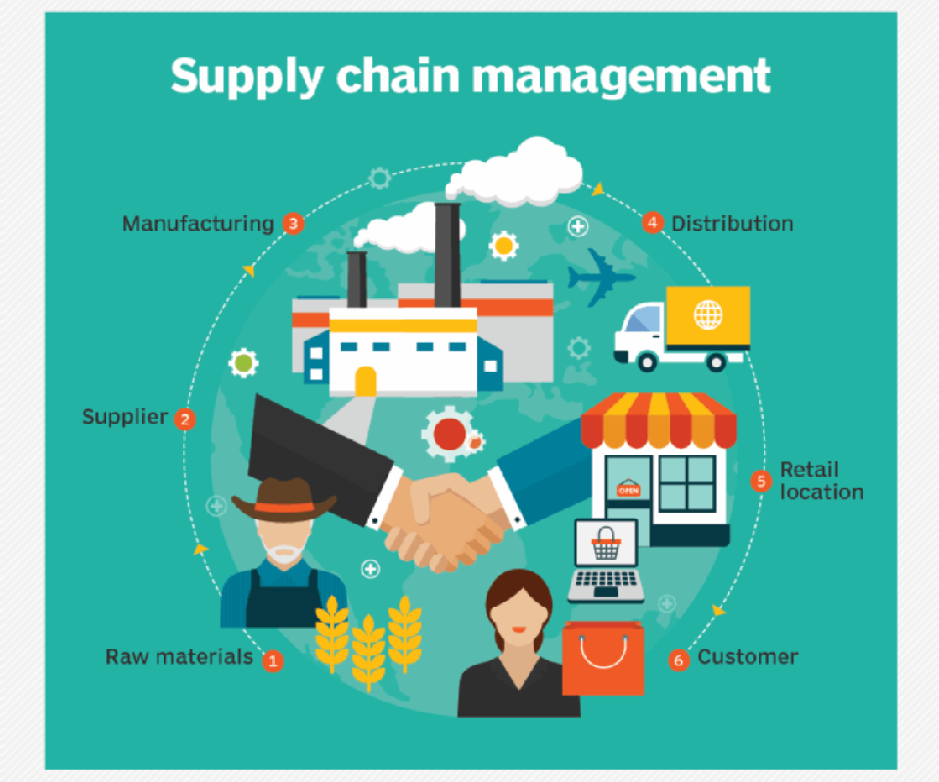
The face of Supply Chain in South Africa has changed over the last few years. Supply Chain leaders proficient in dealing with ambiguity (having to work cross functionally within the business and simultaneously with multi-tiered suppliers and customers to create business value, efficiency and competitive edge) have had the greatest impact. A recent trend with Top Companies is to rebrand and align the Supply Chain functions into one integrated whole, from Plan to Source, Make, Deliver and Return. The result is that Supply Chain owns and manages the relationship and experience with, and of, the customer – customer centricity being the holy grail of business into the future, according to Gartner. Giving the Supply Chain leader true end-to-end value chain accountability.

This incorporation has added great depth to the Supply Chain function, with Procurement over the last decade transforming from just operational purchasing to Strategic Sourcing and Category Management, and recently (in more mature organisations) Supplier Relationship Management and Enterprise Development (including Procurement Excellence, which incorporates risk, governance, compliance, business process standardization and internal audit). Recently, Procurement Excellence is being expanded to the full enterprise, trends such as Big Data is taking flight, data scientists extracting data and providing information analytics and proactive monitoring of the end-to-end Supply Chain Performance, which in turn, is used by Senior leadership to make adaptive decisions across the chain at Executive levels.

Value Chain Management enables thinking that goes beyond product and price to helicopter vision. The next step up is the effect of Supply Chain on revenue generation. In South Africa, the BEE charter has impacted not only how companies source, but how they compete and sell in the marketplace. Clients have prioritised enterprise and Supplier development. This elevation is an agenda point with a number of CEO’s – some even actively sponsoring these functions. The industry hardest impacted is the Services industry, where BEE rating is a large qualifying factor for securing business. The charter has elevated the relevance of Procurement and highlighted the plight of skills development and employee transformation. Even the Gartner Supply Chain report has placed a significant weighting on CSR (Corporate Social Responsibility). Many companies are pulling CSR into the Procurement Department with Enterprise Development and Supplier Development. Supply Chain is becoming the puppet master pulling strings across the entire enterprise.

Changing Competencies

The rapid change of business has inherently, and will continue to do so, changed the skillset required to fulfil the growing demand. The traditional focus on technical skills “hard skills” is no longer sufficient. Competency has taken over as the key differentiator and predictor of success in these turbulent and changing times. Essential competencies having validity across the entire Value Chain discipline are:

1.Dealing with Ambiguity

2.Creativity

3.Innovation Management

4.Motivating Others

5.Planning

  1. Strategic Agility
  2. Building Effective teams
  3. Managing Vision and purpose

Influence and stakeholder engagement is no longer only the responsibility of the leader but essential at every level of the Supply Chain department. The critical competency gaps that are negatively affecting Supply Chain and business as a whole, are firstly, problem solving and analytical skills and secondly, Emotional Intelligence (EQ). In dealing with a large number of blue chip in South Africa, we have noticed and the Industrial Psychologists have confirmed, a sharp decline in problem solving, analytical skills and critical reasoning, in the current talent pool. With complexity and pace of business ever increasing, business requires innovation and solution generation with fast decision making. The current skills pool (which includes Tertiary Institution graduates) is simply not equipped with these skills.

Emotional Intelligence in terms of resilience when dealing with adversity as well as ambiguity is not sufficient for today’s business demand. There is a lack of perseverance, adaptability and flexibility. The second quality relating to EQ is interpersonal effectiveness. Commonly clients are complaining of insufficient competence in influence, stakeholder engagement and conflict management.

For Supply Chain to be an essential, relevant and strategically constructive business force, Supply Chain Professionals need to initiate and drive innovation and implement and execute efficiency across the value chain from point of source to end customer by demonstrating sharp business acumen and influence. The strategic value of Supply Chain professionals has increased overhead cost but the value they added to business have lowered the total cost of ownership. The bottom line is that Supply Chain can fuel and execute the business strategy.

South Africa’s Perfect Talent Storm (Part 1)

South Africa’s Perfect Talent Storm (Part 1) 939 504 peopleadmin

South Africa’s Talent “Perfect Storm”

The next wave in Supply Chain will be fueled by the constrained global economic market, which places a question mark around commercial competitiveness and business sustainability. In short, these goals are on the CEO’s agenda and Supply Chain can lead the transformation required for business growth. The timing is perfect for Supply Chain to rise and be buoyant in this impending perfect storm. The prerequisite: strategic and influential leadership, skills and competencies and a culture of excellence.                                                        

For the Supply Chain to be an essential, relevant and constructive force strategically – executing the business strategy – these professionals need to be able to engage and influence cross functionally and at an executive level. Supply Chain Professionals need to initiate and drive innovation as well as implement and execute efficiently across multi-tier supply chains from point of source to end customer.

Captain of the Ship

The Supply Chain Leader has the potential to be the Initiator, Innovator and Implementer of Transformation in the business of the future. The nature of Supply Chain and its history has been one of constant change and adaptation and has equipped the discipline to lead from the front. The challenge is that business as a whole, has not kept up, or adapted, with the fast-paced business demands and still misunderstand the value and potential contribution of Supply Chain in comparison with other established disciplines. This is evident is the reporting structure where most often Supply Chain reports to Finance or Operations who respectively have a seat at the board. The second challenge is a language barrier. Supply Chain is rife with three letter acronyms and operational matrices, which do not align with Board Performance matrices.

Significant Supply Chain leadership gaps have dampened the impact of Supply Chain’s access to the Board. The Wall Street Journal reported a “massive shift” as increasing complexity outpaced the skillset of the traditional Supply Chain Leader. The largest skills gap currently is Financial Intelligence – understanding and effectively communicating the impacts of Supply Chain decisions on the financial statements of the organization. These skills may be addressed through learning, but besides skills the most effective supply chain professionals also possess certain key competencies, which will be covered next.

Supply Chain Leader Competency gaps historically were about tactical execution and efficiency. The future is about creativity and innovation, as well as big picture thinking which is in short supply. The second competency gap is change management, selling and strategic influence, in order to raise Supply Chain to the Board, the Supply Chain leaders need to be the thought leaders and the “Voice” of Supply Chain within the enterprise as well as outside. The rarest competency is Empathy – Supply Chain leaders with an outside-in focus (refer the book titled “Outside In” by Harley Manning and Kerry Bodine) and mindset. This re-orientation of your impact on “the others” brings a closer intimacy with customers, team members and internal business.

South Africa’s Talent Perfect Storm (Part 2)

  • Published on August 18, 2017

Crew

In the rush for talent, a storm may be brewing that will contract the pool for Supply Chain talent, according to Ruamsook and Craighead from the CSCR in the USA. Is the same true for South Africa? As a developing country with a lot of sociopolitical turbulence, an education uprising, black economic transformation targets, South Africa is in a Supply Chain talent “perfect storm”.

The research highlights four trends that strain the talent pool. Firstly, increased demand for new Supply Chain talent. In SA over the past 12 months, we have seen an increase in the number of newly created Supply Chain roles across the plan, source, make, deliver and return functions, with exponential growth in plan and source. Roles tend to span holistically across the enterprise – up-and downstream. A secondary challenge for business is that many roles remain vacant for extended periods due to lack of relevant skillset in the market. Some executives in multinationals are questioning whether the roles should be moved to other more developed countries they have a presence in.

The second trend is a Supply Chain talent gap, with a third more Baby boomers retiring than later generations entering the workforce. The loss of Baby Boomers also means a loss of good role models. The compound effect of South Africa’ sociopolitical situation makes SA a fertile ground for talent prospecting. The brain drain removes top talent to stable economies and safer locations. These shortages of suitably qualified candidates are putting pressure on employers to retain their current employees. Due to these pressures, 65% of employers are using counter-offers to retain staff that have accepted job offers with other employers. Some organisations employ candidates who have only been with their employers for a short time period.

The implications of these counter offers and short hires are, firstly, that it creates an imbalance between candidate’s salaries and depth of skills. Candidate’s earn above what the market may offer, leaving candidates frustrated and unable to embark on career growth opportunities within other organisations as they are not “affordable”. Secondly, the candidate’s depth of experience is lacking as they have not been with organisation long enough to develop depth of technical skills, knowledge, and most importantly soft skill competencies (such as resilience, influencing, self-leadership, conflict management and problem solving). This in itself, if left unchecked, leads to negative growth of the talent pool.

The third is Profession dynamics, a transition to information/service economy. The projection is that skills needed in the medium term is not possessed by many of the current workforce, nor is business ready for these fast-paced challenges. The Millennials are independent minded; want flexibility and challenge the norm. Traditional business is not ready for this group, or stimulating enough, which leads to a loss of high potential talent. There is concern over the Millennial generation and instant gratification, but companies have a similar “instant Fix” challenge. They have neither time, nor the financial resources to invest in people development. In addition, educational institutions lack the funds and agility to upskill and adapt the curriculum for the fast changing workplace requirements leaving the talent pool ill-equipped.

The Last trend is the academia’s capacity to create new talent. The recent student uprising is a symptom of the frustration felt by the youth who are ill prepared to secure employment and succeed in the work place. South Africa is in the midst of an Educational crisis, which according to an Industrial Psychologist, an advisor to SA corporations, is starting as early as nursery school, where kids are not taught how to learn and reason. Tertiary Institutions are under extreme pressure to churn out larger numbers of graduates to meet demand, but the shortage of math and science students at secondary level makes this task very tenuous. Lowered pass rates are exacerbating the problem even further.

Qualifications mean nothing if you have them, but everything if you don’t. Technikons generate a better caliber skillset with practical application, although corporates still perceive them as lesser to university degrees in South Africa (which have a large theoretical base). Companies are relying on mentorship and coaching to guide the acclimatization from varsity to the workplace. Competencies or “soft skills” are underdeveloped at tertiary institutions providing a significant gap for the discipline and business as a whole.

South Africa has additional trends which fuel the vortex. Globalisation’s effect on skills and competence is most felt in managing diversity across cultures and languages. The South African context is a good learning ground, although still a major challenge for many individuals. A global workplace requires a high ability to deal with complexity, competencies of adaptability and flexibility, as well as deep experience-based knowledge which enables these professionals to navigate the ambiguity of a global source and supply in the face of much competition with global player entering the SA market.

The effect of Matrix structures is significantly felt as some companies moved their strategic operations into global hubs and left only tactical and operational skills in SA. For team members remaining behind, this meant less strategic-  and out of the box thinking exposure and learning, which adds to the lack of depth.

Retrenchment – a double-edged sword and all too prevalent in SA – brings insecurity and lack of transparency. A common consequence of the retrenchment process, is losing the best talent first as they are mobile and being left with often disillusioned and unengaged resources to stage a comeback with. The level of employee engagement often is hard hit during such a process and requires a lot of change management and investment from leadership to turn around and re-engage.

Transformation in South Africa is a reality, as one Supply Chain Executive recently stated, you need to learn the rules of the SA game, adapt your approach or get out the game. It is a mindset, are you Tim (Victim) or Victor? Internal Supply Chain Academies could become the feeder for future business leaders. Source the youth when they have a high learning agility with many bright ideas. Release them to the rest of the business as holistic business impact players and advocators for Supply Chain once upskilled and competent. A serendipitous bonus.

South Africa’s Perfect Talent Storm (Part 3)

  • Published on August 25, 2017

Changing Tide

The rapid change of business has inherently, and will continue to, change the skillset required to fulfil the growing demand. The traditional focus on technical “hard skills” is no longer sufficient. Even for Supply Chain team members, competency has taken over as the key differentiator and predictor of success in these turbulent and changing times. Essential competencies are:

1.Dealing with Ambiguity

2.Creativity

3.Innovation Management

4.Motivating Others

5.Planning

  1. Strategic Agility
  2. Building Effective teams
  3. Managing Vision and purpose

Influence and stakeholder engagement is no longer only the responsibility of the leader but essential at every level of the Supply Chain department. The critical competency gaps that are negatively affecting Supply Chain and business as a whole, are firstly, problem solving and analytical skills and secondly, Emotional Intelligence (EQ). In dealing with a large number of blue chip in South Africa, we have noticed and the Industrial Psychologists have confirmed, a sharp decline in problem solving, analytical skills and critical reasoning, in the current talent pool. With complexity and pace of business ever increasing, business requires innovation and solution generation with fast decision making. The current skills pool (which includes Tertiary Institution graduates) is simply not equipped with these skills.

South Africa’s Perfect Talent Storm (Part 4)

Culture of Excellence

McKinsey coined the term “the war for talent” based on research done into the skills gap in 1998 and again in 2002. The Authors placed the responsibility to become more attractive to talented individuals; building a culture and mindset devoted to high performance, engagement and growth opportunities squarely in the organisation’s hands.

Keys to building a Culture of Excellence:

  1. Vision: Strategic direction & Inspirational Leadership
  2. Powerful conversations & learning culture
  3. Retention Strategy and practices

People require a clear vision and collection mission which is communicated regularly. The Business and Supply Chain Strategy that is filtered down, translated and aligned to the individual’s career strategy. Inspirational Leadership. People yearn for a higher purpose; a leader’s agenda is a picture of an optimistic future with possibilities for the individual and achieved through a team. Building a vision to drive not just for success, but rather significance. A leader should set a strategy and challenge that inspires and that the team can aspire to. This speaks to the basic human needs for certainty and variety. A challenge that pushes one beyond their comfort zone. Attainable yet a stretch; an intellectually stimulating vision to drive towards, breeding passion and engagement. The most successful Supply Chain departments overcame the biggest obstacles, when lead from the front by a great leader.

Powerful collaborative conversations build trust, energy and forward thinking. Regular performance discussions, goal setting and review with good feedback loops are essential. Richard Branson said, the most productive people recognize that making a decision is not about a binary success or failure, it is about conducting an experiment. Where failure is not actually failure, it is just a result that helps you make a better decision next time. Teams flourish in environments where they are able to experiment. Failure builds wisdom and success in the long game. Individuals feel secure to challenge the norm and the result is innovation. Leaders who are decisive and where the decision-making process is clear upfront, show results.

Retention is not a policy; it is a practice. Companies who manage the individual (not employee number) have better employee engagement, productivity, retention and ultimately business results. Retention is a multifaceted approach – from individual career pathing, salary and memorable benefits, work life balance, wellness, formal and informal education.

John Gatherer, in the book “I am Talent”, stated that engaged employees work with passion and have real connection to their companies. They drive innovation and are champions for change.

The times are changing as William Pollard said,

“without change there is no innovation, creativity, or incentive for improvement”.

Those who initiate change will have a better opportunity to manage the change that is inevitable and surf the changing tides. The timing is perfect for Supply Chain to rise and be buoyant in this impending Perfect Storm.

Preparing for an Interview

Preparing for an Interview 939 435 peopleadmin

Business of yester year, was about what you knew, yesterday it was about who you know. Today it is about who knows you and more importantly what do they know or believe about you. The past, success was based on skills and networking. Our current social media and technology age, as brought strangers into our lives and home (binnekamer), managing your personal professional brand has never been this important, interviewing is a critical marketing opportunity for your business, Me Inc.

Pre- Interview Research

  1. Your career path

Interviews are important and needs to be a conscious strategy not just window shopping. Redefine and reset your career path. Creating a career plan, knowing yourself, your needs and desires for the future before you enrol in an interview process is critical. We have been seeing a rise in counteroffers as individuals are not aligning interview processes opportunities to their career, and are being swayed by their current companies with promises and promotions only for the benefit of self preservation, prevention of inconvenience of the managers. The only consequence of counteroffers are that your character comes into questions, you are buy-able, and research shows most people make a change within 6 months after counteroffers anyway. When you have a clear career path, decisions making is easy and congruent and facilitate growth.

  1. Company

Researching an prospective employer is not about facts and their annual report, it is about finding information what your can leverage in a discussion. Twitter to get an understanding of the kind of conversations that are happening in the organisation and their view on issues.

The Waiting Room

Is like a glass display box, you need to be ready, poised and present. Arriving a few minutes early allows you to settle yourself as well as get a feel for the culture and environment. Power pose in the bathroom will charge your batteries of confidence.

First impressions are lasting, a firm handshake and good eye contact is key. A great tip for a smooth transition to the interview room is to ask the interviewer to lead corridors, so you don’t do the awkward dance of left and right, fall over your feet or each other. A powerful NLP technique is the Match and Mirror the person’s voice, in terms of pitch, volume and speed, the result is instant report.

The Interview

Panel interviews are becoming more prevalent due to time constraints, don’t get intimidated. Make a connection with each member, address your answer to the person who asked the question as well as making eye contact with the rest of the member, view is as a presentation with a bigger audience than one.

Telephonic interviews are challenging as your voice needs to convey your personality. Be prepared brush your hair put on your lipstick, get in the zone. NLP research has shown that our non- verbal communication is more important than the words we use. We recommend standing up for the duration or at least the start of the call, the elevation with assist with voice projection and confidence. Smile, the vibration is visual and audible across a telephone.

Key competencies for Procurement and Supply chains of the future

Our clients has expressed great frustration around candidates impressing on paper (cv’s) and disappoint in real life (interviews). The challenge is the lack of intention  and alignment in cv’s. often is a list of skills and facts, rather than a portfolio of evidence. Skills are not a measure of success, competencies are.

Key Competencies:

1 Managing Vision and Purpose

2 Strategic Agility

3 Innovation Management

4 Creativity

5 Building Effective Teams

6 Motivating Others

7 Planning

8 Dealing with Ambiguity

In the wake of the 4th industrial resolution the Master competency is Emotional Intelligence, which will be on the top job skills for the future. This has been confirmed by the Career Builder Survey where 71% of hiring managers stated they valued emotional intelligence in an employee over IQ.

Tough questions

Deal breaker questions we see people fail at

  1. Tell me about yourself: This is the easiest and hardest question, be the story teller of your career story, prepare your elevator speech, engage your audience, show your career highlights. Where have you saved costs, increased revenue, or affected change in business or people?
  2. 5 year plan: You don’t need the perfect answer, you don’t need to know the future, but it is important that you have a direction.
  3. Reason for leaving: Know why you want to leave, how this role lines up with your future plans. What you are not getting for your career or life based on your priorities and what you need.

Interview the interviewer

Show an interest in this person, they leadership, they company and how you can add value to them and yourself. Employment is a reciproprical relationship. What is the company and the line managers goals, priorities and vision for the next period, and how can you contribute to that.

Post interview

One your exit, thank people for their time, if you are interested in pursuing the role, tell them so. If you are uncertain sleep over night, have your questions clarified and be decisive about continuing the engagement. We often say that the way you project management the recruitment process with the client is the only way for them to see how you would management yourself and the work in their environment.

Your career is your life’s work, choose it consciously, represent your brand authentically and live your best life!

Imagineering Your Way Through Your Supply Chain Management Career

Imagineering Your Way Through Your Supply Chain Management Career 939 849 peopleadmin

There is no denying that the Supply Chain Management is critical to the overall of an organisation, yet how integrated it has become in many organisations’ overall strategies, is a matter of debate.

What we can agree on, is that the way we interact with our customers and suppliers has changed dramatically for most companies, in the last five years.

Yet, no matter what changes are brought about on the economic landscape, one thing remains certain – the basic theory of supply and demand is still and always will be, what drive business.

And in the world of Human Resource acquisition, it is no different.

This article will highlight the current and future trends in the supply chain management skills set within South Africa, while analysing where demand will outweigh supply in the future.

The use of case studies will provide some insight into how some companies are dealing with the current deficiencies in the skill set.

It is hoped that this paper will encourage both individuals and training institutions, to provide the South African market with the skills it will require in the next five years.

Supply Chain Management (SCM) has matured over the last five years. Five years ago, many people referred to SCM as ‘just logistics’ and while there are few who unfortunately still hold  this view, they are in the minority.

Most organisations believe that supply chain activities are very important to their organisation’s strategy.

Many organisations, particularly those with international parent companies, have undertaken, or currently are undertaking, a strategic supply chain initiative. These strategies often culminate in some form of job creation. A telling statistic is that during the last five years, one quarter of all SCM vacancies were newly created.

The largest recruitment drive has been on the ‘Buy’ side of the chain. In the beginning of the five year analysis period, most vacancies revolved around eProcurement initiatives.

With the crash of the dot-coms, the focus has been transferred to the procurement transformation initiatives involving strategic sourcing and supplier relationship management.

With the focus on transforming the procurement function, room has now been created for the implementation of eProcurement systems and we will see another increase in the demand for these skills within the next five years.

Currently the demand on the procurement side, is for strategic, analytical thinkers who are able to engage suppliers, to ensure that the procurement function compliments the enterprise’s overall strategy – in other words, having the understanding that Procurement can be a revenue generating function as opposed to acting as a ‘cost containment’ function.

Most of these positions have been at the senior management level and have been filled by individuals who come from a traditional procurement role.

They have typically held a second tertiary qualification, are highly numerate with good business acumen and possess exceptional influencing skills.

They are able to think strategically and long-term and can build relationships cross functionally. A key characteristic is their ability to ‘think out of box’ in order to apply creative solutions to typical problems.

In the last five years therefore, Procurement has developed into a recognised discipline. It is no longer just a ‘job’ or function that is a necessary evil, but rather a critical player in the attainment of a company’s strategic goals.

Successful practitioners require more than a commercial or legal background – they need to possess a holistic understanding of business and be strong change agents.

Negotiation skills; technical understanding necessary in commodity management; knowledge of supply markets and customer needs; Total Cost of Ownership and Product Life-Cycle Management, are skills currently in very short supply.

But they are skills that can be learned. There are few training providers focused on developing these skills within the South African market, but most formal institutions have been slow at developing any relevant courses.

A few initiatives are currently underway to rectify this problem, but for the next three years this lack of qualified procurement individuals will remain. And a number of individuals the country will require in the future.

In order for South Africa to reach its full potential in terms of Black Economic Empowerment and job creation, more needs to be done in this regard.

Demand Planning as an organisational function and having a dedicated resource focusing on this, was very rare five years ago.

The demand plan was often compiled by sales and marketing and then handed to production, who revoked it with the inventory personnel.

There has been a strong drive toward making this process more accurate and in some instances; entire Demand Planning departments have arisen.

What is interesting to note, is that most Managers of these internally appointed (mainly coming from a planning or logistics background). Most of the demand and supply planning functional positions were at the more junior level and were often filled by recent graduates with a strong mathematical focus.

The biggest challenge in recruiting for Demand Planning positions is the fact that this role requires individuals to possess above-average numeracy and data analysis skills, while being strong facilitators and negotiators. These two characteristics are not often found in the same individual.

With the development of the planning function and greater data accuracy resulting from this, the current trend is towards Advance Planning and Scheduling initiatives involving the implementation of technology.

This trend is expected to increase over the next two years, with more and more organisations planning projects in these areas.

Besides demand for skills related to specific technology, demand for technical skills in the areas of production planning and scheduling, transport and distribution planning, will increase.

Individuals in demand will possess an exceptional ability to optimise the traditional function, while those performing a typical ‘administrative’ role, will see diminished career opportunities.

Manufacturing is beginning to take its rightful place in supply chain vernacular. Automation, raw materials and maintenance, are the main areas currently being targeted for improvement.

This will lead to new positions and functions being created and some traditional roles becoming obsolete. Once again, technology is playing a larger role in this sector than ever before.

However, skills in demand are still the traditional engineering roles of production and maintenance, with a strong focus on the individual’s understanding of relevant processes and how to attain optimum productivity.

The renewed importance of Six Sigma, Lean Manufacturing and Theory of Constraints (TOC) capabilities on the fundamental goals of SCM (reducing lead time and uncertainty in  the enterprise), is creating additional areas of employment for practitioners with these skills in non-manufacturing related activities.

‘Outbound Logistics’ – namely warehousing, distribution and transport, continues to be the main area being measured against an individual’s ability to reduce costs, which is in line with the current trend of carrying less inventory.

Although there is an ample supply of practitioners involved in these areas, there is a huge demand for individuals who can develop creative solutions to optimise these functions, while understanding the impact their decision s have on the overall supply chain.

Historically, Warehousing and Distribution was not perceived to have a great value add opportunities and as a result, most practitioners in these areas were not encourage to think creativity or strategically.

Most have no formal Supply Chain training and having worked their way up ‘through the ranks’, have limited exposure to other functions of the supply chain outside of logistics.

This coupled to current performance management criteria (related to reduced inventory levels and cost containment), perpetuates this focus on functional silos. The greatest opportunity for developing existing skills lies in these areas of the supply chain.

In fact, a third of all ‘trainee’ programmes fall within this segment, yet very few these programmes expose the incumbent to other aspects of the supply chain and they are thus perpetuating this problem.

A large majority of ongoing improvement projects happen within the Store and Move areas and demand for skills in the Project Management, Freight Optimisation, Route Scheduling, DRF and Warehouse Management systems implantation arenas, will be strong.

Warehouse Design skills are also in short supply. With the development of new technologies such as Mobile and Radio Frequency Identification (RFID), demand for the individuals who understand the processes, constraints and possibilities involved in this sector, will rise.

Most projects in this sector involve some type of technology implementation, so a basic understanding of technology is essential.

What is encouraging is the development of new positions within the ‘Sell’ side of the chain.

Collaborative efforts are beginning to mature and marketing and sales professionals are beginning to be drawn into the SCM realm, with ‘Channel Management’ and ‘Customer Relationship Management’ playing a role.

Although these types of positions account for 5% of all SCM recruitment over the last five years, the majority have been filled during the last 24 months.

We expect to see an increase in the number of non-traditional related supply chain jobs arising in areas such as Finance, IT, Human and Legal Resources.

However there is a distinct lack of resources available in these areas and our tertiary education providers would do well to incorporate introductory SCM courses into these disciplines.

Employment opportunities within Supply Chain Management have predominantly been confided to those industries involving physical goods – manufacturing, mining etc. the Service Industry is slow to embark on supply chain initiatives within South Africa and hence there are limited employment opportunities in these areas.

Although there are have been some initiatives in the financial services and telecoms sector, still rely on the service of consulting firms, to address their skills needs.

With the maturation of Supply Chain Management, it is predicted that more service industries will see value in embarking on supply chain optimisation projects. This in turn, will lead to more employment opportunities.

The Consulting field accounts for 10% of all SCM recruitment – a lower figure than most would expect and due largely to the tumultuous last few years the sector has gone through.

Also, the last few years have seen a number of organisations appoint Supply Chain Analyst who operate in an internal consulting role across the organisation, thus reducing their need for external consultants.

Growth in terms of skills in the consulting sector will however, remain largely in the areas of competency development, to address new trends such as Value Added Logistics, Radio Frequency Identification (RFID) and Product Life Cycle Management

Technology related skills account for 10% of all SCM recruitment. This figure is predicted to rise within next two years, as more and more organisations are renewing or updating their technology.

According to the Dawson Consulting’s Supply Chain Foresight survey (2003), 45% of respondents felt that one of the biggest challenges in respect to the implementation of technology lay in the availability of suitably qualified implementation personal.

The market has traditionally relied heavily upon those candidates returning from international contracts, as well as internal training, to help relieve this dearth of skills.

This is perhaps the area where skills are the most lacking and include areas like ERP, Track and Trace technology, Geographical Information / Positioning Systems (GPS) and other Mobile Technologies and Business Intelligence.

Although a strong focus is being placed on internal training (7% of all SCM positions filled have been ‘trainee’ positions), these programmes do not provide the ‘instant’ relief that is required to meet supply chain targets. Thus, companies are looking externally to fill their skills shortages.

The fashion of relaying on your competitor to train your future staff is over. Competing companies have the same need and are requiring the same skills.

As an economy, we can no longer rely on traditional market forces to provide us with the skills we need – the SCM industry is developing faster than the skills set, which often means that the skills are just not out there.

But, by applying some creative thinking to one’s human supply chain, one can overcome these obstacles.

Back to top