News

Mentoring for Wisdom

Mentoring for Wisdom 1920 1080 peopleadmin

Everyone within a corporate or entrepreneurial environment often states the following: I wish I had a mentor. I wish I had someone that I could learn the nuances of how to navigate the spaces within the work environment I am in (company culture) within the industry I am in, within the function.

Mentors don’t find you, you find them and if you are lucky, you choose to become one as well.

The relationship between a mentor and a mentee as broad and diverse and as the values which guide us. A personal one to one relationship in not necessary for one to be mentored.

Women’s day, Community and or Business programmes and events, where graduates, youth, or anyone in the community interacts with a speaker, be it a community leader, a business woman, an executive, an entertainer, an author are examples of mentoring events.

For me, my mentors are as varied as my experience and meet the many facets of that which shapes me as a person. My first mentor was my grandmother, she taught me the wisdom of community and generosity. I learned Ubuntu in action through her. My mother as mentor, I learned the wisdom of resilience and independence.

My first corporate mentor was an amazing man whose passion and ingenuity for negotiations made me fall in love with Procurement and Strategic sourcing. I learned creativity and gained a love for my chosen profession. I approached him to be my mentor based on observations on how he engaged with the youth and graduates coming into the organization. His passion to empower the youth in the professional was the fuel that kept him motivated. Through this, I learned kindness, compassion in the workplace, as well as developed a passion for empowering the next generation leaders in any business setting.

And  as the world opened me up to other mentors;  Oprah Winfrey (TV personality & Media executive, and philanthropist), Lisa Nicols (Author & Motivational Speaker), Sarah Jakes-Roberts (Author, Preacher & Motivational Speaker) Brene Brown (Researcher, Author & Speaker), Karen van Vuuren (Executive, Leader, Mentor- Transnet – R.I.P),  Napo Mashaene (Poet, Author, Playwright & Producer), Maria Ramos (Business Executive), Ilse Gravett-Hulzer (Business Executive), Refiloe Moahloli (Author) and Debbie Craig (Author, Business owner & Neuro Change Solution Consultant) became some of my life mentors throughout the years. From these ladies I saw and learned resilience and generosity in motion. They taught me the power of a pioneering indomitable spirit, of paying it forward and of vulnerability, compassion, kindness and courage.

As a trained executive and life coach, I recall asking the coaching facilitator, to distinguish the difference between coaching and mentoring for me. He stated it as follows: mentoring is learning from someone else’s wisdom and experience, coaching is learning to master yourself to gain wisdom from your experiences. In basic terms, mentorship is the seat of wisdom. Coaching and mentoring go hand-in-hand, however, a mentorship relationship can span over many years and many areas of one’s life.

A mentor is someone that you look up to and say, “one day, I want to be just like him or her”, regardless of their age. They embody your aspirations in so many different ways.

And you too, as you navigate this life in all is facets, are a mentor to many of the next generation of leaders – what is in your well of wisdom?

Written by Frances Degbor – Capacity Lead at The People Shop

Soft Digital Skills

Soft Digital Skills 2240 1260 peopleadmin

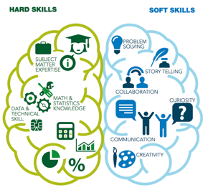
Well-rounded, highly developed soft skills are invaluable to business success in this digital era but what are they and why are they important? While soft skills can at times be more difficult to develop than hard skills, they are arguably equally important for success in business. Hard skills concern an employee’s ability to do a specific task and include specialized technical abilities. Soft skills are more about the way they are done — how they adapt, collaborate, solve problems, make decisions and cognitive skills.

In most jobs, technical skills alone are not enough to be truly effective. A lack of soft skills can limit your potential, or even be the downfall of a business. Earlier this year LinkedIn released a list of the five most in-demand soft skills for 2020 comparatively with the technology, sales and digital hard skills such as Blockchain on the rise. We give individual focus to these skills and assess how to improve them.


#1 Creativity and innovation

Creativity means to creatively approach problems and tasks across business. Bringing new ideas to the table and thinking outside of the box. Alex Gray, from the World Economic Form explains that as a result of new technologies and products, employees are going to have to become more creative in order to benefit from these changes. Creativity can be improved by taking time to let your thoughts wander. Also, making it a habit to sit down and work when you’re sleepy. Research has shown that when you are sleepy, your brain is unfocused, therefore less inhibited and innovation flows.


#2 Persuasion and influence

It is important to continuously advance your career by developing your ability to effectively communicate ideas and persuade your colleagues and stakeholders that it’s in their best interest to follow your lead and ideas. The WEF stated that having persuasion and social skills will be more important than ever in the future. Although we live in a world of technology, people are still far better at social interaction than robots are, currently. The key to gain influence and improve your persuasion skills is to understand what motivates your audience. Once you establish this it would be easier to find a common ground benefiting all. Another way is to state the facts and emphasise the benefits it would have for all the participating parties.


#3 Collaboration and social impact

Companies are putting more emphasis on strong interpersonal skills, and employees who play well with others. Collaboration is crucial in any work environment. The WEF report explained that human interaction in the workplace involves team production, with workers playing off of each other’s strengths and adapting flexibly to changing circumstances. Collaboration involves strong communication skills, an awareness of other people’s strengths and weaknesses, and being able to work with a range of different personalities. It is therefore important to learn how your strengths can complement those of your colleagues to reach a common goal. Completing assessments for insight into yourself, your leaders and your team members.


#4 Adaptability and cognitive flexibility

Adaptability is changing or create modifications in oneself to suit new environments. In workplace culture, it means to be open to new ideas or changes, the ability to work independently or in teams. People who are adaptable have more chances of having better job satisfaction, they are co-creators of their lives. In the long-term links form between adaptability and job performance. One way of developing adaptability is to practise emotional intelligence. According to research on flexibility and adaptability, people with a higher EI adapt swiftly to new changes. Other ways are to take a broader variety of perspectives into consideration and consider the bigger picture. One could also embrace different situations and view challenges as opportunities, mindset change is a game changer.


#5 Emotional Intelligence 

Emotional intelligence is the ability to perceive, evaluate, and respond to your own emotions and the emotions of others. Co-author of Emotional Intelligence 2.0, Travis Bradberry explains that emotional intelligence ‘is the other kind of smart.’ It’s that intangible ‘something’ that helps us tune into the kaleidoscope of human emotions, and measures how adept we are at adjusting our behaviour depending on the mood of a colleague, partner, family member, or our own internal feelings. Emotional intelligence can be gained and improved at any point in life. We at The People Shop have seen the tangible improvement in  employee engagement, resilience and stress management and its effect on business productivity, success and business’ revenues and bottom-line.

The Changing Face of Supply Chain

The Changing Face of Supply Chain 604 533 peopleadmin

There is no denying that Supply Chain Management is critical to the overall performance of an organisation, yet how integrated it has become in many organisations’ overall strategies, is a matter of debate. In future, specialists who focused on cost containment will be extinct, replaced by business leaders and professionals who innovate, influence and implement. People who drive total cost of ownership and value creation across multi-tier supply chains.

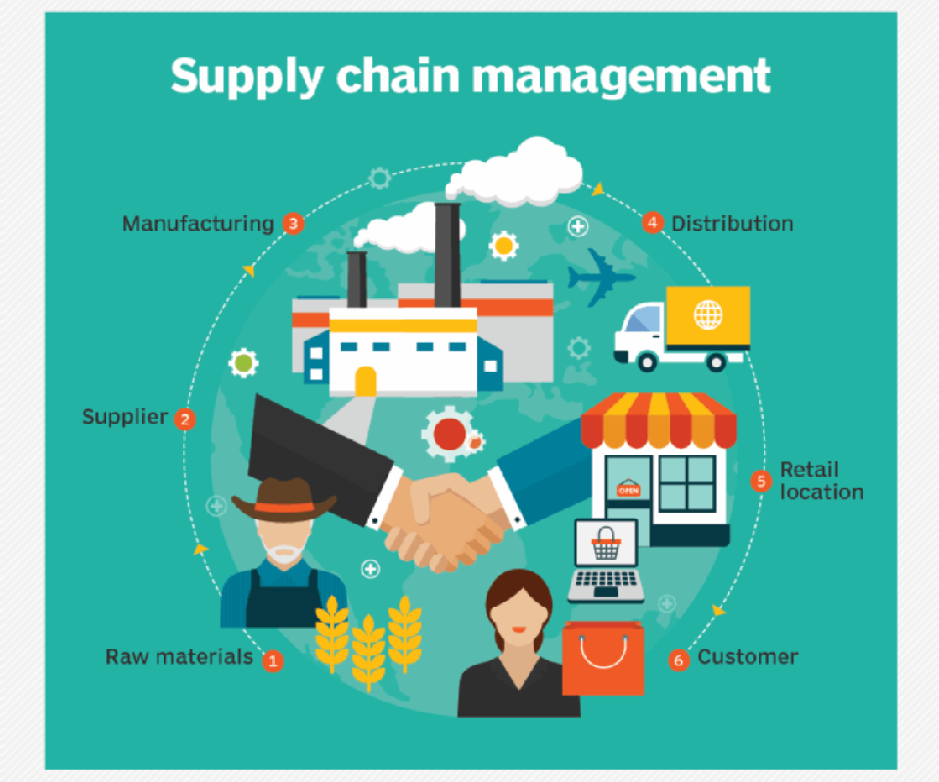
The face of Supply Chain in South Africa has changed over the last few years. Supply Chain leaders proficient in dealing with ambiguity (having to work cross functionally within the business and simultaneously with multi-tiered suppliers and customers to create business value, efficiency and competitive edge) have had the greatest impact. A recent trend with Top Companies is to rebrand and align the Supply Chain functions into one integrated whole, from Plan to Source, Make, Deliver and Return. The result is that Supply Chain owns and manages the relationship and experience with, and of, the customer – customer centricity being the holy grail of business into the future, according to Gartner. Giving the Supply Chain leader true end-to-end value chain accountability.

This incorporation has added great depth to the Supply Chain function, with Procurement over the last decade transforming from just operational purchasing to Strategic Sourcing and Category Management, and recently (in more mature organisations) Supplier Relationship Management and Enterprise Development (including Procurement Excellence, which incorporates risk, governance, compliance, business process standardization and internal audit). Recently, Procurement Excellence is being expanded to the full enterprise, trends such as Big Data is taking flight, data scientists extracting data and providing information analytics and proactive monitoring of the end-to-end Supply Chain Performance, which in turn, is used by Senior leadership to make adaptive decisions across the chain at Executive levels.

Value Chain Management enables thinking that goes beyond product and price to helicopter vision. The next step up is the effect of Supply Chain on revenue generation. In South Africa, the BEE charter has impacted not only how companies source, but how they compete and sell in the marketplace. Clients have prioritised enterprise and Supplier development. This elevation is an agenda point with a number of CEO’s – some even actively sponsoring these functions. The industry hardest impacted is the Services industry, where BEE rating is a large qualifying factor for securing business. The charter has elevated the relevance of Procurement and highlighted the plight of skills development and employee transformation. Even the Gartner Supply Chain report has placed a significant weighting on CSR (Corporate Social Responsibility). Many companies are pulling CSR into the Procurement Department with Enterprise Development and Supplier Development. Supply Chain is becoming the puppet master pulling strings across the entire enterprise.

Changing Competencies

The rapid change of business has inherently, and will continue to do so, changed the skillset required to fulfil the growing demand. The traditional focus on technical skills “hard skills” is no longer sufficient. Competency has taken over as the key differentiator and predictor of success in these turbulent and changing times. Essential competencies having validity across the entire Value Chain discipline are:

1.Dealing with Ambiguity

2.Creativity

3.Innovation Management

4.Motivating Others

5.Planning

  1. Strategic Agility
  2. Building Effective teams
  3. Managing Vision and purpose

Influence and stakeholder engagement is no longer only the responsibility of the leader but essential at every level of the Supply Chain department. The critical competency gaps that are negatively affecting Supply Chain and business as a whole, are firstly, problem solving and analytical skills and secondly, Emotional Intelligence (EQ). In dealing with a large number of blue chip in South Africa, we have noticed and the Industrial Psychologists have confirmed, a sharp decline in problem solving, analytical skills and critical reasoning, in the current talent pool. With complexity and pace of business ever increasing, business requires innovation and solution generation with fast decision making. The current skills pool (which includes Tertiary Institution graduates) is simply not equipped with these skills.

Emotional Intelligence in terms of resilience when dealing with adversity as well as ambiguity is not sufficient for today’s business demand. There is a lack of perseverance, adaptability and flexibility. The second quality relating to EQ is interpersonal effectiveness. Commonly clients are complaining of insufficient competence in influence, stakeholder engagement and conflict management.

For Supply Chain to be an essential, relevant and strategically constructive business force, Supply Chain Professionals need to initiate and drive innovation and implement and execute efficiency across the value chain from point of source to end customer by demonstrating sharp business acumen and influence. The strategic value of Supply Chain professionals has increased overhead cost but the value they added to business have lowered the total cost of ownership. The bottom line is that Supply Chain can fuel and execute the business strategy.

TCO applies Equally to your Human Assest

TCO applies Equally to your Human Assest 600 400 peopleadmin

Recruitment is vital, but often neglected, part of a company’s supply chain. As it is often thought to be a “one-off” process, the laws of business governing other procurement processes are often not applied to the acquisition of an organisation’s greatest asset – its human recourses.  By way of example, the concept of Total Cost of Ownership (TCO) can and should be applied to company’s recruitment process.

In the past few years there has been a significant shift in the relationship between enterprises and their supplier(s) of human resources – i.e. the recruitment agencies. This in turn has culminated in the appointment of a “preferred supplier” for HR.

The premise behind this move is that a carefully selected and managed supplier offers the greatest guarantee of consistently meeting demand at consistently high quality level. In return for an increase in sales volume the supplier will agree to a lower price structure. Conversely, the buyers use competitive market forces to set rates with their preferred suppliers and are not investigating why the original rate structure was negotiated in the first place.

We have been in a ‘skills shortage’ market for most of the last decade and this had led to the employers paying more, both to the employee and the recruiter. Currently the recruitment industry is not regulated by any laws other than those contained in the Labour Relations Act (LRA). ‘Contingency Recruitment’ (i.e. payment is made only to that agent which provided the successful candidate) is the norm today. It is expensive as the high risk is carried by the recruiter.

‘Preferred Supplier’ agreements do nothing to decrease this risk and without assisting the recruiters to decrease their risk and increase their efficiencies, a reduction in rates ultimately forces them to search for alternative clients or lose money. This, in turn, leads to a reduction in the quality of service buyers are receiving.

Those using price as the selection criteria without implementing effective management techniques, are then actually increasing the Total Cost to Ownership of their human resources as they are not necessarily getting the quality appointments who carry the greatest return on investment.

The TCO approach encourages the ‘balanced management’ of supplier agreements. In order to gain greater value from suppliers of your greatest asset – your human assets – enterprises must apply the same rules to this acquisition of resources as to any other, and adopt more creative pricing structures than what is currently in existence.

Some industries are now experiencing unprecedented competition due to the entry of many international players who have lower entry costs than local players. The ‘brain drain’ is a major concern as the increase in numbers of players in industry leads to added competition for the skills pool. Employment equity has led to an increase in costs of recruitment due to the limited resource pool.

Recruitment 4.0 :Emotional Intelligence

Recruitment 4.0 :Emotional Intelligence 939 529 peopleadmin

of the new digital business, finding the “right” candidate has become more important than ever before, yet we are still using old methods in the hopes of new people and new outcomes.

Line managers check lists consist of candidate’s academic prestige, technical skills, and blue-chip affiliations. I understand the importance that these requirements may play in qualifying a candidate for a role. However, no thought is given to their ability to contribute to teams, their resilience, problem solving skills and self mastery, so we end up hiring the candidate with the highest IQ, only for them to be headhunted 6months later by another line manager requiring the same IQ skill set.  Some of the most successful hiring managers and organisations know that to find the “right “candidate, we need to consider more than the cv, experience, and whether they gave the right reasons for leaving in an interview process. It’s about understanding the organisation, the people, and the type of people needed for success. A candidate’s titles and KPI’s also only allow us insight into the requirements for not how well some

According to the Head of Genos International, Dieric Mccann, hiring for EQ is a better predictor of a potential candidate’s success, than hiring for IQ. He describes these successful candidates as:

  1. ´They’re problem solvers, they don’t dwell on issues”
  2. “90% of top performers are skilled at managing their emotions. How an individual reacts in high stress environments can significantly impact the team and results. Those with higher EI understand when they need to take a step back and are less likely to blow up in a tough situation.”
  3. “People with higher EI are generally happier at work and more likely to empathise with and understand others.”
  4. “These people are more self-aware – willing to admit, address and work to avoiding future mistakes.”
  5. “They’re more resilient. Developing one’s emotional intelligence is a key contributing factor to becoming more resilient in work and life. When a person is emotionally resilient, they’re more likely to be able to maintain their productivity and performance in challenging times.”

A similar research approach taken by the IHHP (Institute for Health and Human Potential) consisting of 12,000 people globally across multiple industries, revealed that the top 10% of the highest performers, also scored high in EI. This begs the question, in an age of digital transformation and expansion, when will the idea of the “right” candidate start to change? 

We look at companies like Google and Amazon as the epitome of strategic innovation and align our business strategies with the aim of becoming as inventive and forward thinking. Business then start to look for talent who would be able to execute these ideas from an IQ perspective. However, Google only has 4 main criteria for a successful candidate

  1. General cognitive ability: They ask open-ended questions to learn how you approach and solve problems. There’s no one right answer—your ability to explain your thought process and how you use data to inform decisions is what’s most important.
  2. Leadership: Not how many teams you’ve managed, but rather how you would use your communication and decision-making skills to mobilize others, such as stepping up to a leadership role at work or with an organization, or by helping a team succeed even when you weren’t officially the leader.
  3. Role-related knowledge: how an individual’s strength combines with their experience to drive impact. “We don’t just look for how you can contribute today, but how you can grow into different roles—including ones that haven’t even been invented yet.”
  4. Googleyness: “How you work individually and, on a team, how you help others, how you navigate ambiguity, and how you push yourself to grow outside of your comfort zone.”

I’m not suggesting that we exclude IQ as a criterion, but rather that we change the weighting that is given to IQ over EQ. IQ does not predict how a candidate will adjust to a company’s culture, how they will interact with teams, how resilient they are under pressure; yet, it is often the differentiator between the A and B candidate.

In the infamous words of Jack Ma: “you need the right people with you, not the “best” people.

At the Peopleshop our vision is to become a Human Supply Chain Lab that fosters Emotionally Intelligent Leaders and teams in Vuca Times. Our new Advisory Division in partnership with Genos International is ready to just that. We welcome all leaders who are ready for the step change to get in touch.

Imagineering Your Way Through Your Supply Chain Management Career

Imagineering Your Way Through Your Supply Chain Management Career 939 849 peopleadmin

There is no denying that the Supply Chain Management is critical to the overall of an organisation, yet how integrated it has become in many organisations’ overall strategies, is a matter of debate.

What we can agree on, is that the way we interact with our customers and suppliers has changed dramatically for most companies, in the last five years.

Yet, no matter what changes are brought about on the economic landscape, one thing remains certain – the basic theory of supply and demand is still and always will be, what drive business.

And in the world of Human Resource acquisition, it is no different.

This article will highlight the current and future trends in the supply chain management skills set within South Africa, while analysing where demand will outweigh supply in the future.

The use of case studies will provide some insight into how some companies are dealing with the current deficiencies in the skill set.

It is hoped that this paper will encourage both individuals and training institutions, to provide the South African market with the skills it will require in the next five years.

Supply Chain Management (SCM) has matured over the last five years. Five years ago, many people referred to SCM as ‘just logistics’ and while there are few who unfortunately still hold  this view, they are in the minority.

Most organisations believe that supply chain activities are very important to their organisation’s strategy.

Many organisations, particularly those with international parent companies, have undertaken, or currently are undertaking, a strategic supply chain initiative. These strategies often culminate in some form of job creation. A telling statistic is that during the last five years, one quarter of all SCM vacancies were newly created.

The largest recruitment drive has been on the ‘Buy’ side of the chain. In the beginning of the five year analysis period, most vacancies revolved around eProcurement initiatives.

With the crash of the dot-coms, the focus has been transferred to the procurement transformation initiatives involving strategic sourcing and supplier relationship management.

With the focus on transforming the procurement function, room has now been created for the implementation of eProcurement systems and we will see another increase in the demand for these skills within the next five years.

Currently the demand on the procurement side, is for strategic, analytical thinkers who are able to engage suppliers, to ensure that the procurement function compliments the enterprise’s overall strategy – in other words, having the understanding that Procurement can be a revenue generating function as opposed to acting as a ‘cost containment’ function.

Most of these positions have been at the senior management level and have been filled by individuals who come from a traditional procurement role.

They have typically held a second tertiary qualification, are highly numerate with good business acumen and possess exceptional influencing skills.

They are able to think strategically and long-term and can build relationships cross functionally. A key characteristic is their ability to ‘think out of box’ in order to apply creative solutions to typical problems.

In the last five years therefore, Procurement has developed into a recognised discipline. It is no longer just a ‘job’ or function that is a necessary evil, but rather a critical player in the attainment of a company’s strategic goals.

Successful practitioners require more than a commercial or legal background – they need to possess a holistic understanding of business and be strong change agents.

Negotiation skills; technical understanding necessary in commodity management; knowledge of supply markets and customer needs; Total Cost of Ownership and Product Life-Cycle Management, are skills currently in very short supply.

But they are skills that can be learned. There are few training providers focused on developing these skills within the South African market, but most formal institutions have been slow at developing any relevant courses.

A few initiatives are currently underway to rectify this problem, but for the next three years this lack of qualified procurement individuals will remain. And a number of individuals the country will require in the future.

In order for South Africa to reach its full potential in terms of Black Economic Empowerment and job creation, more needs to be done in this regard.

Demand Planning as an organisational function and having a dedicated resource focusing on this, was very rare five years ago.

The demand plan was often compiled by sales and marketing and then handed to production, who revoked it with the inventory personnel.

There has been a strong drive toward making this process more accurate and in some instances; entire Demand Planning departments have arisen.

What is interesting to note, is that most Managers of these internally appointed (mainly coming from a planning or logistics background). Most of the demand and supply planning functional positions were at the more junior level and were often filled by recent graduates with a strong mathematical focus.

The biggest challenge in recruiting for Demand Planning positions is the fact that this role requires individuals to possess above-average numeracy and data analysis skills, while being strong facilitators and negotiators. These two characteristics are not often found in the same individual.

With the development of the planning function and greater data accuracy resulting from this, the current trend is towards Advance Planning and Scheduling initiatives involving the implementation of technology.

This trend is expected to increase over the next two years, with more and more organisations planning projects in these areas.

Besides demand for skills related to specific technology, demand for technical skills in the areas of production planning and scheduling, transport and distribution planning, will increase.

Individuals in demand will possess an exceptional ability to optimise the traditional function, while those performing a typical ‘administrative’ role, will see diminished career opportunities.

Manufacturing is beginning to take its rightful place in supply chain vernacular. Automation, raw materials and maintenance, are the main areas currently being targeted for improvement.

This will lead to new positions and functions being created and some traditional roles becoming obsolete. Once again, technology is playing a larger role in this sector than ever before.

However, skills in demand are still the traditional engineering roles of production and maintenance, with a strong focus on the individual’s understanding of relevant processes and how to attain optimum productivity.

The renewed importance of Six Sigma, Lean Manufacturing and Theory of Constraints (TOC) capabilities on the fundamental goals of SCM (reducing lead time and uncertainty in  the enterprise), is creating additional areas of employment for practitioners with these skills in non-manufacturing related activities.

‘Outbound Logistics’ – namely warehousing, distribution and transport, continues to be the main area being measured against an individual’s ability to reduce costs, which is in line with the current trend of carrying less inventory.

Although there is an ample supply of practitioners involved in these areas, there is a huge demand for individuals who can develop creative solutions to optimise these functions, while understanding the impact their decision s have on the overall supply chain.

Historically, Warehousing and Distribution was not perceived to have a great value add opportunities and as a result, most practitioners in these areas were not encourage to think creativity or strategically.

Most have no formal Supply Chain training and having worked their way up ‘through the ranks’, have limited exposure to other functions of the supply chain outside of logistics.

This coupled to current performance management criteria (related to reduced inventory levels and cost containment), perpetuates this focus on functional silos. The greatest opportunity for developing existing skills lies in these areas of the supply chain.

In fact, a third of all ‘trainee’ programmes fall within this segment, yet very few these programmes expose the incumbent to other aspects of the supply chain and they are thus perpetuating this problem.

A large majority of ongoing improvement projects happen within the Store and Move areas and demand for skills in the Project Management, Freight Optimisation, Route Scheduling, DRF and Warehouse Management systems implantation arenas, will be strong.

Warehouse Design skills are also in short supply. With the development of new technologies such as Mobile and Radio Frequency Identification (RFID), demand for the individuals who understand the processes, constraints and possibilities involved in this sector, will rise.

Most projects in this sector involve some type of technology implementation, so a basic understanding of technology is essential.

What is encouraging is the development of new positions within the ‘Sell’ side of the chain.

Collaborative efforts are beginning to mature and marketing and sales professionals are beginning to be drawn into the SCM realm, with ‘Channel Management’ and ‘Customer Relationship Management’ playing a role.

Although these types of positions account for 5% of all SCM recruitment over the last five years, the majority have been filled during the last 24 months.

We expect to see an increase in the number of non-traditional related supply chain jobs arising in areas such as Finance, IT, Human and Legal Resources.

However there is a distinct lack of resources available in these areas and our tertiary education providers would do well to incorporate introductory SCM courses into these disciplines.

Employment opportunities within Supply Chain Management have predominantly been confided to those industries involving physical goods – manufacturing, mining etc. the Service Industry is slow to embark on supply chain initiatives within South Africa and hence there are limited employment opportunities in these areas.

Although there are have been some initiatives in the financial services and telecoms sector, still rely on the service of consulting firms, to address their skills needs.

With the maturation of Supply Chain Management, it is predicted that more service industries will see value in embarking on supply chain optimisation projects. This in turn, will lead to more employment opportunities.

The Consulting field accounts for 10% of all SCM recruitment – a lower figure than most would expect and due largely to the tumultuous last few years the sector has gone through.

Also, the last few years have seen a number of organisations appoint Supply Chain Analyst who operate in an internal consulting role across the organisation, thus reducing their need for external consultants.

Growth in terms of skills in the consulting sector will however, remain largely in the areas of competency development, to address new trends such as Value Added Logistics, Radio Frequency Identification (RFID) and Product Life Cycle Management

Technology related skills account for 10% of all SCM recruitment. This figure is predicted to rise within next two years, as more and more organisations are renewing or updating their technology.

According to the Dawson Consulting’s Supply Chain Foresight survey (2003), 45% of respondents felt that one of the biggest challenges in respect to the implementation of technology lay in the availability of suitably qualified implementation personal.

The market has traditionally relied heavily upon those candidates returning from international contracts, as well as internal training, to help relieve this dearth of skills.

This is perhaps the area where skills are the most lacking and include areas like ERP, Track and Trace technology, Geographical Information / Positioning Systems (GPS) and other Mobile Technologies and Business Intelligence.

Although a strong focus is being placed on internal training (7% of all SCM positions filled have been ‘trainee’ positions), these programmes do not provide the ‘instant’ relief that is required to meet supply chain targets. Thus, companies are looking externally to fill their skills shortages.

The fashion of relaying on your competitor to train your future staff is over. Competing companies have the same need and are requiring the same skills.

As an economy, we can no longer rely on traditional market forces to provide us with the skills we need – the SCM industry is developing faster than the skills set, which often means that the skills are just not out there.

But, by applying some creative thinking to one’s human supply chain, one can overcome these obstacles.

Back to top